Every election night ends with numbers on a screen. Few viewers see how those numbers are made. The process is slower, more physical, and more carefully checked than the broadcast suggests.
Vote counting is the process of counting votes in an election. It can be done by hand or by machine. In the United States, the compilation of election returns and the validation of the outcome is called canvassing. That validation forms the basis of the official results.
Manual Counts: Piles, Readers, and Observers
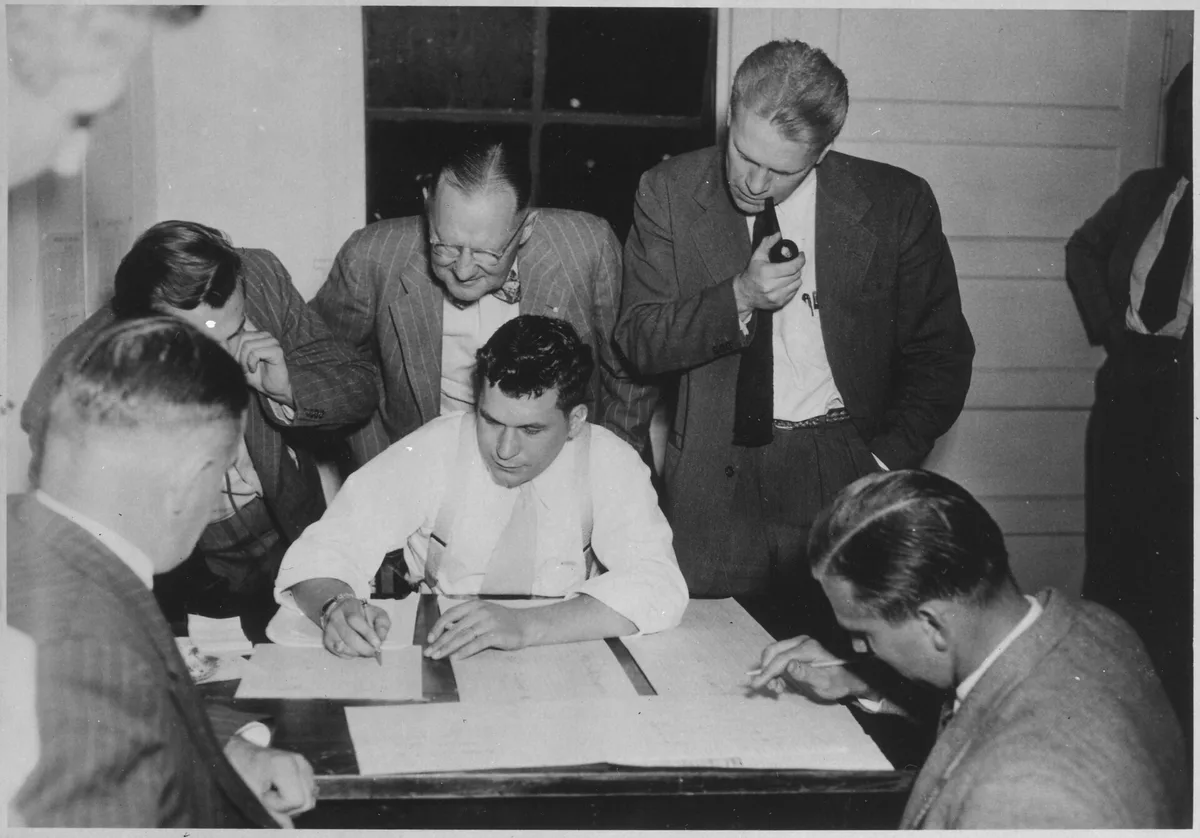
Manual counting, also known as hand-counting, requires a physical ballot that represents voter intent. Workers take the ballots out of the boxes. They read them, interpret them, and tally the results.
One method sorts ballots into piles, one pile per candidate, and counts each pile. Another has one official read every ballot aloud while other staff tally. Some procedures let observers tally along. They can then check the piles against their own counts. Versions of these methods have been used in Ghana, Indonesia, Mozambique, Sweden, Minnesota, and elsewhere.
Hand counts are slow. They are also transparent. Every step happens in front of people who can object.
Why does the method matter? Because each one leaves a trail. Piles can be counted again. Read-aloud tallies can be checked by the whole room. Observers can note a disagreement on the spot, while the ballot is still in view.
Machine Counts: Fast, Tested, and Guarded
Larger elections often use computers to produce quick results. Tallies from many locations must reach the central election office. They must be carried or transmitted accurately. Officials keep election computers off the internet to reduce the risk of hacking. Paper ballots and computer files of results are stored until they are tallied. That makes secure storage a real task.
The machines themselves are stored for years. They are briefly tested before each election. Problems, when they happen, tend to have plain causes. Broken sensors, paper misfeeds, and undiscovered bugs top the list. This connects to our earlier piece, What FCC media ownership rules still restrict — and what they stopped guarding years ago.
None of this makes machines perfect. It makes their problems visible. A broken sensor is a hardware issue. A misfeed is a paper issue. Both can be found, named, and fixed. Both leave the paper ballots untouched.
From Tally to Official Result
Counting is not the final step. Canvassing compiles the returns and validates the outcome. Only then does a running tally become an official result. This is the step the screen never shows. Each level of the count feeds the next. The validation decides when the numbers are final.
That is also why election nights feel slow. Fast numbers are unofficial numbers. The official count waits for the validation to finish. Patience is part of the design, not a flaw in it. The wait is the price of a count you can later trust.
Audits and Recounts: The Built-In Check
Manual counting may be used for election audits and recounts in areas where automated counting systems are used. A recount re-reads the ballots. An audit checks the paper against the machine totals. These checks exist by design. The checks and balances built into the voting process are there to reduce the chance of error and fraud in the first place. For related coverage, see The rules against taxpayer-funded propaganda exist — and mostly aren't enforced.
Voters can watch for three things. Whether ballots are paper. Whether observers are present. Whether the count gets checked again. Those features carry most of the trust.
Conclusion
Vote counting looks mysterious from the outside. Up close, it is a chain of small, checkable steps. Read the ballot. Tally the pile. Secure the files. Validate the total. Some steps run by hand. Others run on machines kept off the internet. The evergreen lesson is the same in every cycle. Canvassing turns raw counts into official results, and the paper trail exists so the totals can be checked again.